Summarize with
Flatbed towing costs in 2026 generally range from $95 to $150 for a base hook-up fee, plus a mileage rate between $4 and $10 per mile. Most drivers pay a total between $125 and $300 for a standard local tow within a ten-mile radius. Total prices vary significantly based on vehicle weight, the time of service, and the distance between the pickup location and the final destination.
Standard car towing services for long-distance transport carry higher totals, often exceeding $500 for trips over 50 miles. These 2026 rates reflect sustained increases in commercial insurance premiums and the higher maintenance costs associated with modern hydraulic flatbed equipment. North Beach Recovery monitors these industry shifts to help vehicle owners prepare for roadside expenses. This guide provides a detailed breakdown of current pricing structures, hidden fees, and the economic factors influencing local towing prices.
Core Factors Influencing Tow Truck Pricing
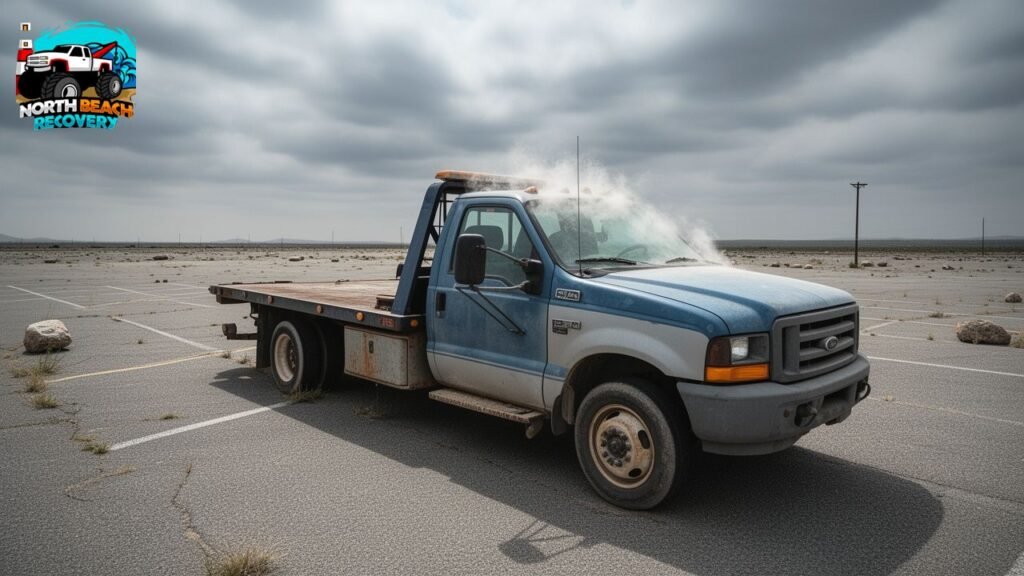
Flatbed towing rates depend on several operational variables that extend beyond simple distance. Flatbed trucks feature a hydraulic bed that lowers to the ground, allowing a vehicle to be pulled up entirely onto the platform. This method prevents wear on the drivetrain and is mandatory for most all-wheel-drive and electric vehicles. Because flatbeds are more expensive to purchase and operate than traditional wheel-lift trucks, the base fee is typically 20 percent higher.
Base Hook Up Fees
The hook-up fee, also called a service fee, covers the cost of dispatching the truck and the labor required to secure the vehicle on the bed. In 2026, many companies moved toward a flat starting rate that accounts for fuel surcharges. Data from AAA indicates that roadside service providers are adjusting these fees annually to keep pace with labor market demands.
Per Mile Rates
Once the vehicle is loaded, the towing cost per mile becomes the primary driver of the final bill. Short-distance local tows usually have higher per-mile rates to offset the time spent in traffic. Long-distance transport might see a lower rate per mile after the first 50 miles, though the total cost remains substantial. Drivers who want a broader breakdown of mileage-based charges can review our towing cost per mile breakdown.
Vehicle Weight and Size
The weight of a vehicle directly impacts fuel consumption and equipment wear. Modern electric vehicles (EVs) are significantly heavier than their internal combustion counterparts. According to a report by BloombergNEF, the average weight of new passenger vehicles continues to rise as battery density and safety features increase. Heavier cars often require specialized flatbeds with higher weight ratings, leading to increased tow truck pricing for heavy SUVs and EVs.
Estimated Flatbed Towing Rates for 2026
The following table outlines projected price ranges for various flatbed towing services. These figures represent national averages, though urban centers like New York or Los Angeles often see rates at the higher end of this spectrum.
Service Type | Base Fee Range | Average Rate Per Mile | Typical Total (10 Miles) |
|
Standard Sedan |
$95 – $115 |
$4.00 – $6.00 |
$135 – $175 |
|
Heavy SUV or EV |
$110 – $140 |
$5.00 – $8.00 |
$160 – $220 |
|
Emergency After-Hours |
$150 – $200 |
$6.00 – $10.00 |
$210 – $300 |
|
Low-Clearance Vehicle |
$125 – $160 |
$5.00 – $7.50 |
$175 – $235 |
|
Motorcycle Flatbed |
$75 – $110 |
$3.50 – $5.50 |
$110 – $165 |
Flatbed Towing Cost Per Mile
The flatbed towing cost per mile generally falls between $4 and $10 for standard vehicles, although heavier SUVs, EVs, low-clearance vehicles, and emergency calls can cost more. The mileage rate is usually added to the base hook-up fee, so the final price depends on both the distance traveled and the equipment required.
Bonus Tip: To protect the financial investment you are making in professional transport, always take clear photos of your vehicle’s condition before the driver loads it. These photos serve as vital evidence for insurance claims if any damage occurs during transport or at the storage yard.
Factors That Can Increase Flatbed Towing Costs
Local towing prices are not fixed. They fluctuate based on environmental conditions and the difficulty of the recovery. If your car is stuck in a ditch or a parking garage with low ceilings, the operator must use additional equipment or specialized techniques.
Winching and Recovery Fees
If a vehicle is off the road, a winching fee is applied. This is usually billed in half-hour increments or as a flat fee per 50 feet of cable used. In 2026, expect winching fees to start around $75 for basic recoveries. Complex recoveries involving mud, snow, or steep embankments can easily double the total bill.
After Hours and Emergency Surcharges
Emergency towing performed during late-night hours, holidays, or major weather events carries a premium. Most companies apply a surcharge for any call received between 9:00 PM and 6:00 AM. This fee compensates the driver for on-call availability and the increased safety risks associated with low-visibility roadside work.
Labor and Cleanup Costs
In the event of an accident, the towing company may charge for debris removal or the use of absorbent materials for leaked fluids. These costs are often overlooked but are standard in professional car towing services.
Things to Consider Before Calling a Tow Truck
Before committing to a service provider, you should evaluate your current coverage and the specific technical needs of your vehicle.
- Insurance Coverage: Many comprehensive insurance policies include roadside assistance. Check your policy to see if you have a capped limit on towing distance or a preferred provider network. Understanding what roadside assistance covers can also help determine what portion of a flatbed tow may be covered.
- AWD Requirements: Confirm with the dispatcher that your vehicle is all-wheel-drive. This ensures they send the appropriate flatbed equipment to prevent drivetrain damage. Drivers can also compare flatbed and wheel-lift towing to understand why equipment choice matters.
- Destination Rates: Ask the driver if the company charges a “gate fee” if the vehicle is being dropped off at a storage yard or an impound lot.
- Pricing Transparency: Request a breakdown of the base fee, mileage rate, and any potential surcharges before the truck is dispatched.
- Vehicle Condition: Are the tires inflated? Can the car be shifted into neutral? If the wheels are locked, the operator might need to use dollies, which adds to the labor cost. If the vehicle will not start, it is also worth checking whether a dead battery is the actual problem before arranging a tow.
Bonus Tip: Ask the dispatcher if their quoted price includes the “deadhead” mileage. Some companies charge for the distance they travel to reach your location, while others only charge for the miles your car is actually on the truck.
Economic Trends Affecting Towing in 2026
The towing industry is facing unique economic pressures that influence the average towing cost. Fuel remains a volatile expense, but insurance is the primary factor driving up tow truck pricing. A study from the American Transportation Research Institute highlights that commercial insurance premiums for heavy vehicles have risen significantly over the last few years.
Furthermore, the technology integrated into modern vehicles requires more training for operators. Modern cars feature advanced driver assistance systems (ADAS) that can be sensitive to how a vehicle is handled during recovery. Towing companies must invest in continuous training and higher-end equipment to ensure these systems are not damaged, and these costs are passed down to the consumer in the form of higher service rates.
Common Questions Regarding Flatbed Costs
Why is flatbed towing more expensive than a dolly tow?
Flatbed trucks are more expensive to buy, maintain, and fuel. They also require more time to load and secure the vehicle properly. The added cost provides a higher level of safety for your car, especially for luxury, classic, or AWD models.
Does the price change if the car is in a parking garage?
Yes. Standard flatbeds are often too tall to enter parking structures. This requires a “low-clearance” truck to move the vehicle to an open area before it can be loaded onto a flatbed, which adds a labor fee to the total bill.
Are there hidden fees for electric vehicles?
While not exactly “hidden,” many companies charge a premium for EVs due to their weight. Towing companies also face higher liability when handling large lithium-ion batteries, which can influence the base service rate.
Managing the Financial Side of Roadside Emergencies
Understanding the structure of flatbed towing costs allows you to make informed decisions during a stressful breakdown. By knowing that $150 to $300 is the standard range for local transport, you can identify if a quote is fair or excessive. Always verify the credentials of the service provider and ensure they have the proper equipment for your specific vehicle type. For a broader look at overall towing costs, see our breakdown of what drivers can expect to pay for a car tow.
Reach Out for Assistance
Professional roadside support requires specialized equipment and experienced operators who prioritize vehicle safety. If you find yourself in need of assistance, North Beach Recovery provides reliable flatbed towing and recovery. For information regarding service areas or specific rate estimates, you can reach the office by calling +1 252-453-0573 or by sending an email to chase@northbeachrecovery.com. Dealing with a vehicle breakdown is difficult, but clear pricing and expert service help simplify the process.
Sources
- AAA – Provides data on national roadside assistance trends and average service costs.
- J.D. Power – Offers automotive industry analysis and vehicle valuation data.
- BloombergNEF – Tracks global trends in electric vehicle weight and battery technology.
- American Transportation Research Institute – Researches economic factors impacting commercial transportation and insurance.
- Bureau of Labor Statistics – Tracks inflation and labor costs within the automotive repair and service sectors.