Summarize with
A dead battery rarely dies the day it fails. Many batteries send warning signs for weeks until they finally leave a driver stranded, and by the time the control panel light comes on and a car battery replacement service is commonly the quickest way back on the road. Several batteries fade slowly over a winter of short trips; others drop dead overnight after a heat wave cooks the electrolysis inside. This complete guide walks through what in reality shortens a battery life, how to tell when yours is failing and what a proper replacement contains not the generic advice you should find on any auto parts store flyer, but the details that change how long a battery actually lasts.
How Long Does a Car Battery Last
Most lead-acid batteries are rated to last three to five years, but that number assumes a moderate climate and regular driving two conditions that a lot of drivers don’t actually have. Heat is the bigger enemy, not cold.
According to AAA’s automotive research, sustained high temperatures accelerate the internal corrosion that eventually kills a battery’s ability to hold a charge, which is why batteries in hot, humid regions often fail years before their rated lifespan.
Cold doesn’t cause the damage directly, but it exposes it. A battery that’s already lost 30% of its capacity from heat cycling might start fine in July and refuse to turn over on the first frosty morning in November. That is not an accident cold expands engine oil and requires more cranking amps as the battery has less to give.
Driving habits matter approximately as much as climate. A car that does five minutes trips to the store never fully reloads between starts and the alternating current generator never gets enough run time to top the battery back off. Over months, that pattern drains a battery at the same rate as leaving interior lights on overnight more slowly.
Signs of a Weak Car Battery You Shouldn’t Ignore
A slow to crank engine in the morning is the more obvious sign, but it is usually not the first sign. Dimming headlamps at idle, a control panel battery warning that flashes on and off, and electronic components reset oneself after every start are all early tells.
Corrosion at the terminals is worth checking by hand, not just by eye. A white or bluish crust around the posts is a byproduct of the battery venting gas as it ages, and it builds resistance into the connection even when the battery itself still has some life left. Wiping it away with a baking soda and water solution sometimes buys a car another few weeks but if the corrosion comes back within days, that’s the battery telling you it’s failing internally, not just dirty.
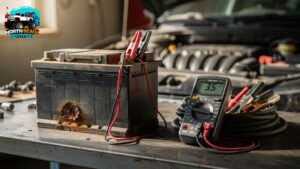
How to Check a Car Battery Before You Assume It’s Dead
A weak crank does not automatically mean the battery requires replacing; it could be the alternator, a parasitic drain, or rusty wires.
| Testing Method | What It Measures | Equipment Needed | Best For |
|---|---|---|---|
| Multimeter voltage test | Resting voltage (12.6V = full charge) | Digital multimeter | Quick at-home check |
| Free store load test | Voltage under simulated load | Retailer’s testing rig | Confirming a suspected weak battery |
| Professional diagnostic test | Cold cranking amps vs. rated spec, alternator output | Shop-grade battery/electrical analyzer | Diagnosing intermittent or unclear symptoms |
Car Battery Maintenance Tips That Actually Extend Battery Life
A battery that is secured loosely rattles against its plate on harsh roads, and that persistent vibration loosens internal plate material over months, silently reducing capacity until any warning light appears.
→ Keeping terminals clean and tight is the cheapest maintenance step that gets skipped most often.
→ A light cover of insulator grease on the positions after cleaning slows corrosion buildup, and a terminal that is even a little loose creates resistance that forces the alternator to work harder to maintain charge, which ironically shortens both the battery’s life and the alternator’s.
How to Maintain a Car Battery Through Seasonal Extremes
Knowing how to maintain a car battery in a seaside or wet climate looks different than doing it somewhere dry and moderate. Salt air accelerates erosion on terminals and battery terminals obviously quicker than inland conditions. So a battery that would last five years elsewhere would require terminal cleaning every month near the beach just to stay ahead of it.
Parking matters more than most drivers realize. A car left in direct sun through repeated 90 degree in the afternoon puts the battery through a heat cycle every day, and that daily increase and compression of internal components is what eventually cracks plates or breaks down the electrolyte. Garage parking or even just parking a car so the engine bay is not facing full sun measurably slows that process.
The Car Battery Service Checklist Every Driver Should Know
A simple car battery service checklist catches most problems before they turn into a no-start morning:
- Check the resting voltage every few months, specifically before winter
- Inspect terminals for erosion and tighten any loose links
- Verify the battery is protected in its tray without excess movement
- Note the manufacture date and track it against the typical three to five year of lifespan
- Have the alternator’s charging output tested if the battery seems to drain repeatedly despite being replaced
What Happens During a Car Battery Replacement Service
1.Diagnosis first
A technician tests the existing battery and the charging system before assuming the battery is at fault; replacing a good battery doesn’t fix a bad alternator.
2.Match the specs
The replacement needs to match the vehicle’s group size, cold cranking amp rating, and terminal layout not just “fit in the tray.”
3.Disconnect safely
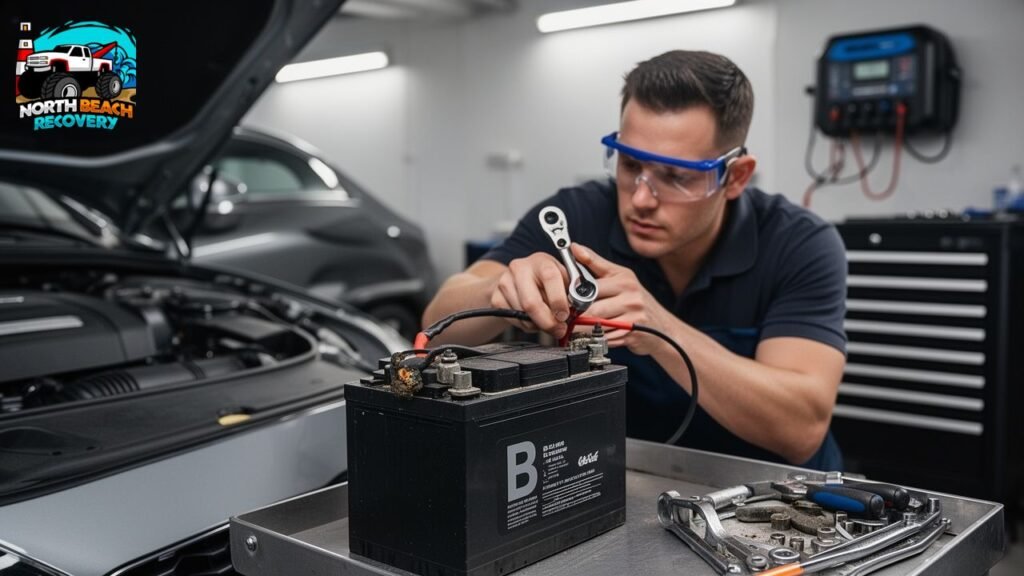
The negative terminal comes off first, then the positive, to avoid a short across metal tools and the car’s body.
4.Remove and inspect the tray
Corrosion or damage to the battery tray gets addressed now, since it’s much harder to reach once a new battery is installed.
5.Install and torque terminals properly
Overtightened terminals can crack posts; undertightened ones cause the resistance problems covered earlier.
6.Reset onboard systems
Some newer vehicles need the battery management system reprogrammed after a swap, or the alternator won’t charge correctly.
7.Road test
A short drive confirms the alternator is charging the new battery and no dashboard warnings persist.
What to Weigh Before Choosing a Car Battery Replacement Service
Warranty terms
A prorated warranty and a full-replacement warranty aren’t the same thing ask specifically how many months are covered at full value before it prorates down.
Whether the alternator gets tested too
A shop that only sells and installs batteries without checking the charging system is treating a symptom, not the cause.
Battery group size accuracy
The wrong group size can physically fit but sit loosely or misalign the terminals, creating the vibration problems covered earlier.
Disposal and recycling handling
The EPA for battery disposal/recycling explains that lead-acid automotive batteries should be returned to a battery retailer or appropriate collection program rather than placed in regular trash or recycling bins.
Questions Drivers Often Ask About Car Battery Service
Can a car battery be recharged instead of replaced?
A battery that is simply drained from sitting unused, like after a long trip away, often recovers fully with a slow charge. A battery that is failing due to age or internal damage will take a charge temporarily but drain again within days.
How often should battery terminals be cleaned?
Every three to six months in most climates and more often in coastal or humid areas where corrosion builds up faster.
Does a car battery replacement service include testing the alternator?
A thorough one does, since installing a new battery without checking the charging system risks the same failure happening again within weeks.
Is it safe to jump-start a battery repeatedly instead of replacing it?
Occasionally, yes, but repeated jump-starts put extra strain on the starter motor and alternator, and a battery that needs jumping more than once or twice in a short span is signaling it’s near the end regardless of what a jump start temporarily fixes.
What’s the difference between a weak battery and a bad alternator?
A weak battery usually struggles to start the car but runs fine once it’s going; a failing alternator often causes the car to run fine at first then stall or lose electrical function while driving as the battery drains with no charge coming in.
A Few Honest Thoughts on Battery Care
None of this requires a mechanic’s toolkit or a lot of time checking terminals a few times a year and paying attention to how the car cranks in the morning catches most problems before they become a stranded-car situation. Batteries don’t usually fail without warning; they fail without anyone paying attention to the warning.
Getting Help With Your Car Battery Replacement Service
Diagnosing a weak battery, matching the right specs to a vehicle, and handling old battery disposal correctly are the parts of a car battery replacement service that are easy to get wrong without the right equipment on hand. North Beach Recovery handles battery testing, replacement, and charging system diagnostics for drivers who’d rather not guess at what’s actually causing a no-start.
Contact North Beach Recovery at +1 252-453-0573 or email chase@northbeachrecovery.com to talk through what’s going on with your vehicle. A quick voltage and load test upfront usually saves a second trip later.
Sources
- AAA — Automotive Research: aaa.com
- National Highway Traffic Safety Administration (NHTSA): nhtsa.gov
- Consumer Reports — Auto Maintenance: consumerreports.org