Skip to content
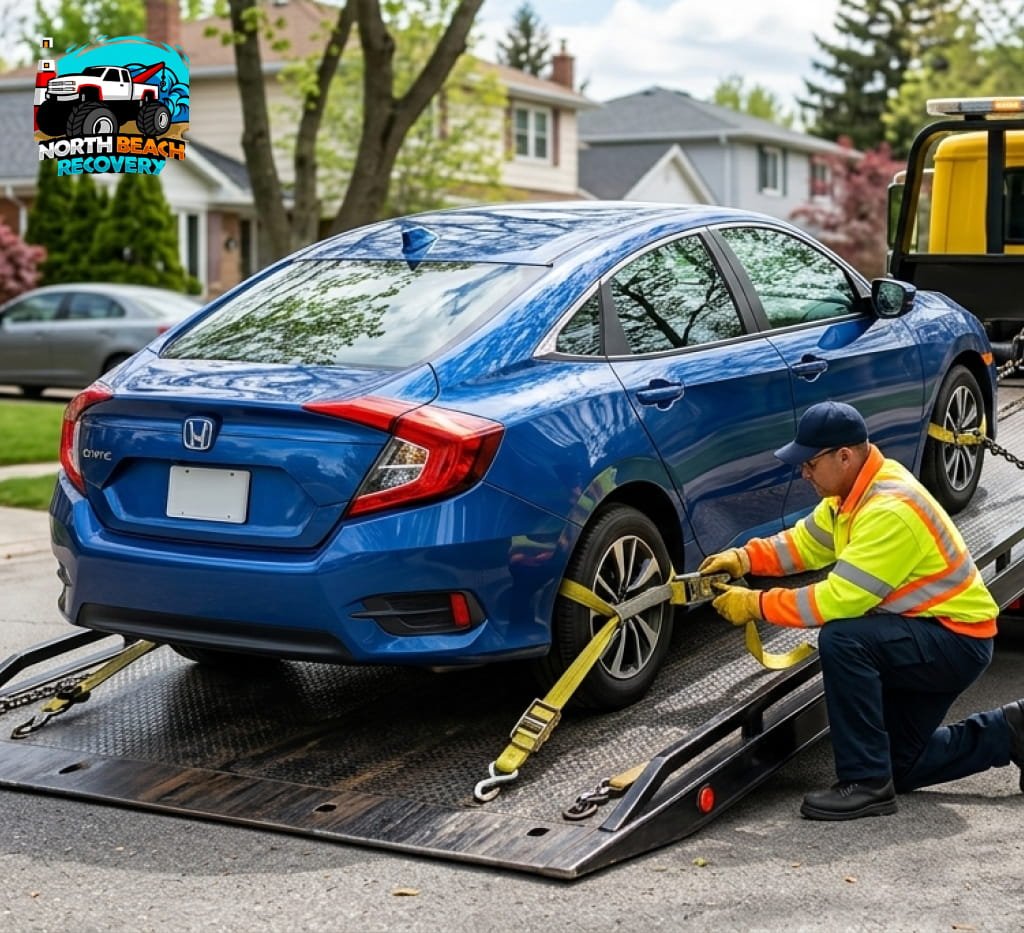
In 2026, the average towing cost per mile for a standard passenger vehicle typically ranges from $4.00 to $9.00. This mileage rate is almost always added to a base hook-up fee, which currently sits between $75 and $125 for most local calls. For short-distance tows under five or ten miles, many providers charge a flat minimum rate starting around $100 to $150 to ensure that the costs of labor, fuel, and equipment maintenance are covered, regardless of the distance traveled.
This pricing reflects the current economic environment, where insurance premiums and specialized equipment costs have stabilized but remain higher than in previous decades. This guide explains the specific factors that determine the final bill for vehicle recovery and transport. North Beach Recovery provides this breakdown to help motorists understand the typical market rates they will encounter during a roadside event.
Pricing Structures for Vehicle Transport
The cost of moving a disabled vehicle is rarely a single flat fee. Instead, the industry uses a multi-layered pricing model to account for the diverse needs of different recovery situations. Understanding these layers helps drivers avoid confusion when they receive an estimate.
The Initial Hook Up Fee
The hook-up fee is a standard charge that covers the professional labor of securing the vehicle and the use of the tow truck itself. It represents the cost of the operator traveling to the location and performing the physical work required to prepare the car for transport. In 2026, this fee remains the most consistent part of the bill. It does not include any actual travel distance with the vehicle attached.
Mileage Rates and Calculations
The towing cost per mile begins the moment the truck starts moving toward the destination with the vehicle in tow. Some companies may offer the first few miles for free as part of the hook-up fee, but most start the meter immediately. For long-distance towing rates, the price per mile might decrease slightly if the total distance exceeds 50 miles, as the efficiency of highway travel reduces the relative cost of labor per mile.
Comparing Costs by Vehicle Classification
The size and weight of a vehicle dictate the type of equipment needed, which in turn changes the average towing cost per mile. Heavier vehicles require larger trucks with more powerful hydraulic systems and higher fuel consumption.
| Vehicle Type | Base Hook-up Fee | Cost Per Mile | Average Total (10 Miles) |
|---|---|---|---|
| Standard Sedan | $75 – $110 | $4.00 – $7.00 | $115 – $180 |
| Large SUV/Pickup | $90 – $130 | $5.00 – $9.00 | $140 – $220 |
| Motorcycle | $60 – $95 | $3.50 – $6.00 | $95 – $155 |
| Heavy-Duty (RV/Bus) | $175 – $300 | $10.00 – $18.00 | $275 – $480 |
| Specialty/Luxury | $130 – $200 | $7.00 – $12.00 | $200 – $320 |
Variables That Influence the Final Bill
While mileage is a primary driver of cost, several external factors can push the price higher. These variables often relate to the difficulty of the job or the timing of the request.
Time of Day and Emergency Response
Emergency towing rates frequently include surcharges for services provided outside of standard business hours. Calls made late at night, on weekends, or during major holidays usually incur an additional fee ranging from $50 to $150. This surcharge compensates drivers for on-call availability and overtime pay.
Recovery Challenges and Winching
If a vehicle is not on a flat, paved surface, standard towing rates do not apply. Recovery involves using a winch and cable to pull a vehicle from a ditch, mud, snow, or an embankment. Winching is typically billed by the hour or at a flat rate per setup. According to data from the Bureau of Labor Statistics, the cost of specialized labor in the transportation sector has increased, leading to recovery fees that often start at $100 per hour in addition to the base tow price.
Bonus Tip: Always inform the dispatcher if your vehicle is in a parking garage. These structures have low clearance heights that require specific “low-profile” trucks, and failing to mention this can lead to delays and extra service fees.
Market Data and Economic Drivers
The towing industry is sensitive to broader economic trends. Fuel prices are the most obvious factor, but insurance and equipment costs are equally influential. A report by IBISWorld indicates that insurance costs for towing operators have risen significantly due to the high risks associated with roadside work. These overhead expenses are a major reason why local towing price per mile has remained above $4.00 in recent years.
Furthermore, the complexity of modern vehicles affects pricing. Many new cars require flatbed towing specifically to avoid damaging sensitive all-wheel-drive systems or electric drivetrains. Flatbed trucks are more expensive to purchase and operate than traditional hook-and-chain wreckers, which contributes to the higher average towing cost per mile seen across the country. Statistics from Statista show that the demand for specialized towing services is growing as electric vehicle adoption increases. While these macro-economic trends establish the standard market rates, several specific vehicle-related factors will further determine the final out-of-pocket cost for a driver.
Things to Consider Before Making a Decision
Before agreeing to a tow, drivers should evaluate several factors to ensure they are getting a fair price and the correct service.
- Vehicle Condition: Are the tires inflated? Can the car be shifted into neutral? If the wheels are locked, the operator might need to use dollies, which adds to the labor cost.
- Drop-off Location: Some repair shops do not accept after-hours drop-offs. Ensure the destination is ready for the vehicle to avoid “storage fees” or a second tow the next morning.
- Insurance Coverage: Many drivers have towing coverage through their insurance or credit card companies without realizing it. Contacting the provider first can often save the entire cost of the tow.
Bonus Tip: Ask for a “total out-of-pocket” estimate before the truck arrives. This estimate should include the hook-up fee, the mileage charge, and any known surcharges for time of day or vehicle type.
Common Questions About Towing Rates
Understanding industry standards helps clarify why certain charges appear on an invoice. These questions address common points of confusion for vehicle owners.
Does distance affect the hook-up fee? No, the hook-up fee is generally a fixed price based on the vehicle type. The distance only changes the mileage portion of the total cost. However, if the truck has to travel a very long way just to reach you, some companies may charge a “deadhead” fee for the trip to your location.
Are specialty vehicles more expensive to tow? Yes, as indicated by the higher rates in the classification table, vehicles like classic cars, lowered sports cars, or heavy machinery require extra care and specific equipment. North Beach Recovery uses specialized loading techniques for these vehicles to prevent frame or body damage, which involves higher labor costs and more expensive equipment.
Clear Answers to Frequent Inquiries
How much does it cost to tow a car 50 miles?
For a 50-mile trip, a driver can expect to pay between $275 and $575. This includes a $75 to $125 hook-up fee plus $200 to $450 in mileage charges, assuming a rate of $4.00 to $9.00 per mile.
Is there a difference between roadside assistance and towing?
Roadside assistance usually covers minor fixes like jump-starts, tire changes, or fuel delivery. Towing is the physical transport of a vehicle to a different location. While many roadside plans include towing, they often limit the “free” distance to 5 or 10 miles.
Why is heavy-duty towing so much more expensive?
Heavy-duty trucks require significantly more fuel and much more expensive insurance policies. The operators also need specialized certifications to handle large rigs, buses, or heavy equipment safely.
Can I negotiate the price per mile?
In emergency situations, negotiation is difficult. However, for planned transport, such as moving a non-running project car across the state, many companies are willing to provide a flat-rate quote that is lower than standard emergency rates.
Final Considerations for Drivers
Calculating the towing cost per mile involves more than just looking at the odometer. The base fee, the weight of the vehicle, and the time of day all play a part in the final cost. By understanding these components, motorists can better prepare for the financial aspects of vehicle recovery. It is always wise to confirm the total estimated cost and the accepted payment methods before the service begins. Comparing local rates and checking for existing insurance benefits are the most effective ways to manage these expenses. Every situation is unique, so evaluating specific needs against these market averages will provide the most accurate expectation for 2026 pricing.
Assistance and Support
If you require professional vehicle transport or recovery, clear communication regarding pricing is essential. North Beach Recovery provides reliable service with transparent rate structures tailored to the specific needs of your vehicle. For detailed information or to request a service estimate, you can contact the office at +1 252-453-0573 or reach out via email at chase@northbeachrecovery.com. Dealing with a vehicle breakdown is stressful, and having a dependable partner ensures the process remains straightforward and efficient.
Sources
- Bureau of Labor Statistics – Provides data on labor costs and wage trends within the transportation and recovery industry.
- IBISWorld – Offers market research reports on the towing industry, including cost drivers and profit margins.
- Statista – Supplies statistical data on vehicle trends, including the growth of the electric vehicle market and its impact on transport services.