Skip to content
Preventative maintenance for tow trucks centers on a rigorous schedule of hydraulic inspections, cable integrity checks, and brake system monitoring. Proactively maintaining these specific areas prevents equipment failure during high-tension recoveries and reduces the risk of mechanical breakdowns while hauling heavy loads. Operators must prioritize daily visual checks and scheduled deep-system audits to ensure the vehicle remains stable and responsive under the intense physical stress of towing operations.
This guide provides a detailed breakdown of the mechanical and structural maintenance required for safe operation. The following information is derived from years of direct field experience in vehicle recovery and heavy-duty transport. Following these standards helps operators avoid costly repairs while protecting everyone sharing the road.
Hydraulic System Reliability
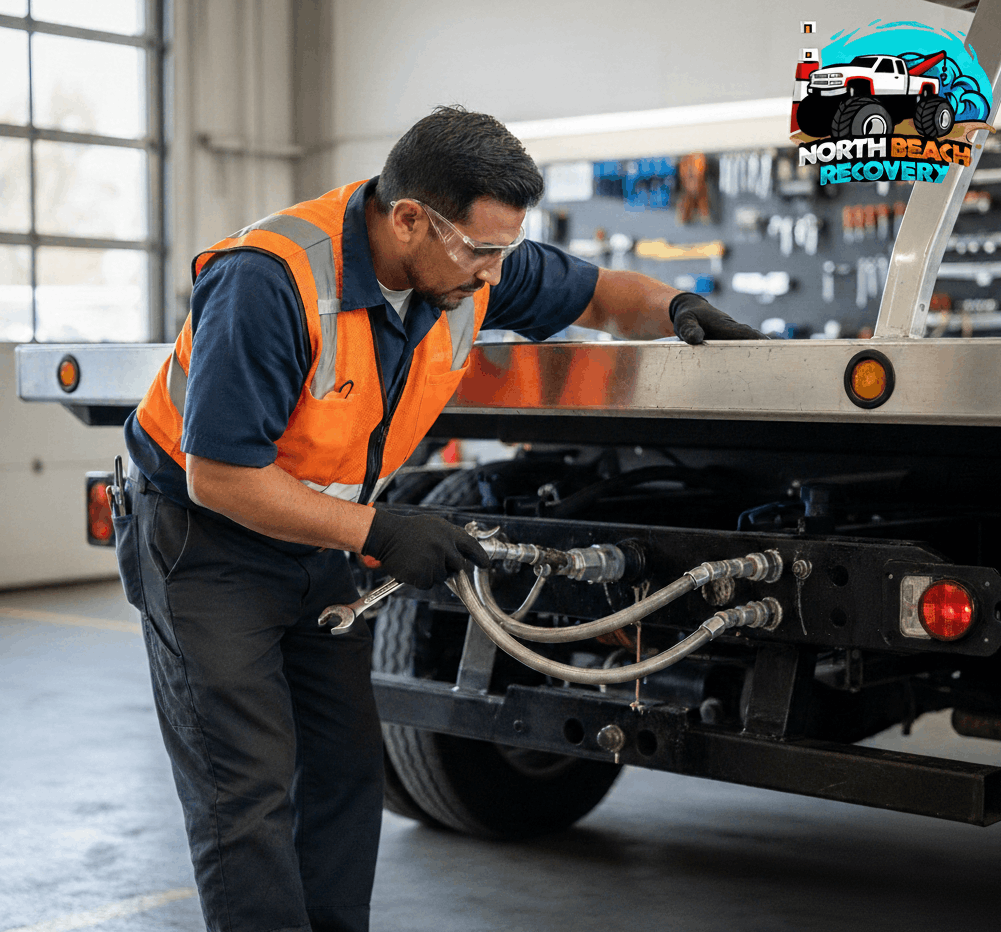
The hydraulic system acts as the heart of any recovery vehicle. Without consistent pressure and clean fluid, booms and wheel lifts can fail or move unpredictably. Daily checks should focus on the hydraulic hoses and fittings. Look for any signs of “weeping” or dampness around connections, as these indicate a slow leak. A minor leak can quickly lead to a total loss of pressure once the system is placed under the weight of a heavy vehicle.
Fluid quality is just as important as fluid quantity. Hydraulic fluid should appear clear and bright. If the fluid looks milky or cloudy, it often means water has entered the system, which can cause internal corrosion and pump damage. Dark or burnt-smelling fluid suggests the system is overheating. A report from the National Fluid Power Association indicates that contaminated fluid causes the vast majority of hydraulic system failures. Replacing filters and fluid according to the manufacturer’s hour meter readings prevents these issues from developing.
Winch and Wire Rope Integrity
The winch is the most dangerous component of a tow truck if it is not properly maintained. Wire rope experiences extreme tension and can snap with lethal force if it is frayed or kinked. Every morning, pull out the cable and inspect it for “bird-caging,” which occurs when the strands separate and lose their structural strength. Any cable with more than a few broken wires in a single lay must be replaced immediately to ensure safety.
Proper lubrication of the wire rope prevents rust and reduces internal friction between the strands. Use a lubricant specifically designed for wire rope that can penetrate to the core. According to safety guidelines from the Occupational Safety and Health Administration, regular inspection of tensioning devices and drum attachments is necessary to prevent accidental cable release. Ensure the cable winds evenly onto the drum; “stacking” the cable on one side can cause it to crush itself and weaken the metal.
Bonus Tip: Periodically spool the entire cable out under light tension. This helps the rope sit flat on the drum and prevents the outer layers from burying themselves into the inner layers during a heavy pull.
Maintenance Intervals for Critical Components
Standardizing maintenance tasks based on time and usage ensures no component is overlooked. The following table outlines a typical schedule for a medium-duty tow truck.
| Component | Frequency | Action Required |
|---|---|---|
| Hydraulic Hoses | Daily | Check for leaks, cracks, or abrasions |
| Wire Rope | Daily | Inspect for frays, kinks, and proper lubrication |
| Tire Pressure | Daily | Adjust to manufacturer specifications for load |
| Lighting & Beacons | Daily | Verify all emergency and work lights function |
| PTO & Pump | Weekly | Check for unusual noise or vibrations |
| Grease Points | Weekly | Lubricate all pivot pins and slides |
| Brake Linings | Monthly | Inspect for wear and heat damage |
| Hydraulic Fluid | 6 Months | Test for contamination or replace |
Tire Health and Load Ratings
While the maintenance schedule provides a vital baseline, operators must also pay close attention to the specific physical stresses placed on the vehicle’s foundation. Tires on a tow truck face unique challenges because of the massive weight shifts that occur during a recovery. Unlike a standard delivery truck, a tow truck carries significant weight behind the rear axle, which places immense stress on the rear tires and suspension. Use a high-quality pressure gauge to check tires every morning when they are cold. Under-inflated tires generate excessive heat, which is the leading cause of tire blowouts.
Data provided by the National Highway Traffic Safety Administration suggests that tire-related issues are a leading factor in commercial vehicle accidents. Look for uneven wear patterns, which might indicate an alignment issue or worn suspension components. Check the sidewalls for “zipper” cracks or bulges. Because tow trucks often work in debris-filled areas like accident scenes, check between dual rear tires for trapped rocks or metal that can puncture the rubber or cause a fire due to friction.
Electrical Systems and Visibility
Safety on the roadside depends heavily on being seen. A tow truck’s lighting system, including the overhead light bar, directional arrows, and work lights, must be in perfect working order. Corroded wiring is a common problem because tow trucks are frequently exposed to road salt and rain. Inspect the wiring harnesses underneath the truck for any sagging or exposed copper.
Test the backup alarm and the trailer plug connections weekly. If the truck uses a wireless light bar for towed vehicles, ensure the batteries are charged and the signal is strong. Visibility is the first line of defense against distracted drivers.
Braking Performance Under Load
A tow truck must be able to stop not only its own weight but also the weight of the vehicle it is carrying or pulling. This requirement puts extra strain on the brake pads, rotors, and air lines. If the truck uses air brakes, perform a daily “leak-down” test to ensure the system holds pressure. Listen for the sound of air escaping when the brakes are applied.
Heat soak is a genuine concern for recovery operators. Heavy braking while descending a grade with a vehicle on the back can cause brake fade. Inspect the rotors for any blue discoloration, which indicates they have been overheated. If the steering wheel shakes when the brakes are applied, the rotors are likely warped and need resurfacing or replacement.
Things to Consider Before Making a Maintenance Decision
Before deciding to repair a component in-house or send it to a specialized shop, evaluate the specific needs of the equipment.
- Tooling Requirements: Many modern hydraulic systems require specialized pressure gauges and flow meters for accurate diagnosis.
- Part Quality: Opt for Original Equipment Manufacturer (OEM) parts for critical safety components like winch motors and J-hooks.
- Safety Certifications: Certain structural repairs, especially on the boom or subframe, may require a certified welder to maintain the truck’s legal load rating.
- Downtime vs. Cost: Preventive replacement of a five-year-old hydraulic hose is much cheaper than an emergency roadside repair during a midnight call.
Bonus Tip: Keep a detailed maintenance log for each truck. This creates a paper trail that proves the vehicle was safe in the event of an inspection or an accident. It also helps track the lifespan of specific parts like tires and brakes.
Structural and Subframe Inspection
The constant twisting and pulling forces of towing can lead to metal fatigue in the truck’s frame. North Beach Recovery recommends a monthly inspection of the subframe and the mounting bolts that secure the towing unit to the chassis. Look for “rust streaks” coming from bolt holes, which indicate that a bolt is loose and rubbing against the metal.
Check the welds on the boom and the wheel lift for hairline cracks. These cracks often start small and are hidden by dirt or grease. Clean the high-stress areas before inspecting them. If any structural deformation is found, the truck should be taken out of service until a professional can assess the integrity of the steel.
Common Questions About Tow Truck Care
Maintenance requirements can vary depending on the type of truck and the environment where it operates. Trucks working in coastal areas with salt air require more frequent lubrication and electrical cleaning than those in dry climates.
One common question involves how often to grease the “slides” on a flatbed or carrier. These should be greased weekly if the truck is used daily. Without lubrication, the metal-on-metal friction will wear down the wear pads, leading to a shaky, unstable bed.
Another frequent concern is the lifespan of synthetic winch lines versus steel cables. While synthetic lines are lighter and safer if they break, they are more susceptible to UV damage and abrasion from road debris. Operators must weigh these factors based on their specific recovery needs.
Questions People Often Ask
How often should I replace my winch cable if I do not see any damage?
Most industry standards suggest replacing steel winch cables every two to three years regardless of visible wear. Internal corrosion and metal fatigue can hide inside the strands where a visual inspection cannot reach.
Can I use standard engine oil in my hydraulic system in an emergency?
No. Standard engine oil has different viscosity and detergent properties that can damage hydraulic pumps and seals. Always use the specific hydraulic fluid grade recommended by the manufacturer.
Why does my tow truck vibrate when the PTO is engaged?
Vibration during Power Take-Off (PTO) engagement usually indicates a worn U-joint in the PTO shaft or a misalignment between the pump and the transmission. This should be addressed immediately to prevent a total pump failure.
What is the best way to clean road salt off my towing equipment?
Use a high-pressure wash with a salt-neutralizing solution, focusing on the undercarriage, hydraulic cylinders, and electrical connectors. Simply rinsing with water may not remove the chemical bonds of modern road salts.
Summary of Safe Practices
Consistent maintenance is the only way to ensure a tow truck remains a safe tool rather than a liability. By focusing on the hydraulics, winch assembly, and tires, North Beach Recovery ensures that equipment is ready for the most demanding jobs. Every operator should treat the morning inspection as the most important part of their shift. Evaluate your equipment daily, listen for new noises, and never ignore a small leak.
Contact Information
For professional assistance and reliable vehicle solutions, reach out to the team at North Beach Recovery. You can contact North Beach Recovery by calling +1 252-453-0573 or by sending an email to chase@northbeachrecovery.com for more information regarding vehicle safety and recovery standards.
Sources
- National Fluid Power Association – Provides technical standards and data on hydraulic system health and maintenance.
- Occupational Safety and Health Administration – Offers safety regulations and inspection criteria for winching and wire rope operations.
- National Highway Traffic Safety Administration – Sources for commercial vehicle tire safety and crash prevention data.
- Towing and Recovery Association of America – The national voice of the towing industry providing best practices for equipment maintenance.