Skip to content
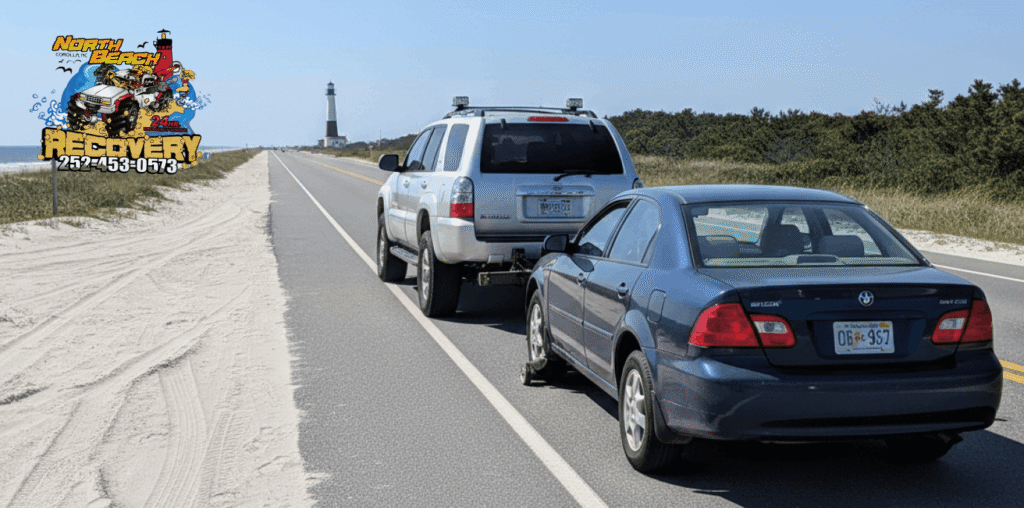
Towing a car with another vehicle requires a specific set of tools and a clear understanding of weight limits. To do this safely, the towing vehicle must have a higher Gross Vehicle Weight Rating (GVWR) than the car being pulled. While DIY towing can work in limited situations, professional towing services are designed to reduce roadside risks, prevent mechanical damage, and keep drivers safe during stressful breakdown scenarios. Most drivers use a tow strap, a tow bar, or a tow dolly to connect the two vehicles.
Moving a disabled vehicle is a technical task that involves more than just a strong rope. Mistakes can lead to transmission damage, brake failure, or serious accidents on the road. This guide provides the necessary steps and safety protocols for residents and drivers to manage a tow without calling for professional recovery equipment immediately. Following these professional standards helps protect both the vehicles and the people involved in the process.
Essential Towing Equipment and Methods
Selecting the right equipment is the first step in a successful tow. Not every tool is suitable for every distance or vehicle type.
Tow Straps and Chains
Tow straps are made of strong synthetic fibers like nylon or polyester. They are lightweight and easy to store, making them common for short-distance recovery, such as pulling a car out of a ditch. However, they require a driver in the towed vehicle to control the steering and brakes. While safety chains are mandatory as a secondary backup for all towing, using heavy chains as the primary connection is less common for road towing because they do not stretch. If a primary chain snaps, the metal links can become dangerous projectiles.
Bonus Tip: When using a tow strap, tie a bright orange or red cloth in the center of the strap. This makes the connection visible to other drivers who might otherwise try to drive between the two vehicles.
Tow Bars
A tow bar is a rigid metal frame shaped like a “V” that connects the front of the towed vehicle to the hitch of the towing vehicle. This method is much more stable than a strap because it maintains a fixed distance between the cars. It allows the towing vehicle to control the braking of both units if a supplemental braking system is installed.
Tow Dollies
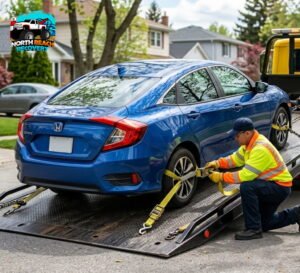
A tow dolly is a small two-wheeled trailer that lifts the front wheels of the towed car off the ground. This is often the best choice for front-wheel-drive vehicles. It prevents the transmission from spinning while the car moves, which reduces the risk of mechanical damage caused by heat.
Comparing Towing Options
The following table outlines the differences between common methods to help determine which fits a specific situation.
| Method | Best Use Case | Driver Required in Towed Car? | Max Speed |
|---|---|---|---|
| Tow Strap | Emergency recovery/Short distance | Yes | 15-20 mph |
| Tow Bar | Long-distance/Flat towing | No | 45-55 mph |
| Tow Dolly | Front-wheel drive cars | No | 55 mph |
| Flatbed Trailer | All vehicle types/Long distance | No | Highway speeds |
Understanding Weight and Towing Capacity
Before connecting any equipment, a driver must verify the towing capacity of the lead vehicle. Pulling a load that exceeds the manufacturer’s limits can cause the engine to overheat or the brakes to fail. Information regarding these limits is usually found on a sticker inside the driver’s side door jamb or in the owner’s manual.
According to data from The National Highway Traffic Safety Administration (NHTSA), exceeding a vehicle’s weight rating significantly increases the distance required to stop. This is because the brakes on the towing vehicle are only designed to stop the weight of that specific car plus its maximum payload. Adding another 3,000 to 4,000 pounds of metal creates a massive amount of kinetic energy that standard brakes might not handle during a sudden stop.
Bonus Tip: Always account for the weight of the fuel, tools, and passengers inside the cars when calculating the total load. These items can add several hundred pounds to the final figure.
Safety Protocols and Legal Requirements
Towing a car is regulated by state and local laws to ensure public safety. Most jurisdictions require a “Towed Vehicle” sign or specific lighting setups.
Lighting and Visibility
The rear vehicle must have working brake lights and turn signals that sync with the lead vehicle. If the car’s electrical system is dead, magnetic towing lights can be attached to the trunk or roof and plugged into the lead vehicle. A report from The National Safety Council indicates that rear-end collisions are a primary risk in towing scenarios, often caused by poor visibility of the connection or a lack of signal synchronization.
Steering and Transmission
The ignition of the towed car must be in the “accessory” or “on” position. This prevents the steering column from locking, which would make it impossible for the car to follow the lead vehicle through turns. For vehicles with automatic transmissions, the car must be in neutral. However, some manufacturers warn that towing an automatic car with the drive wheels on the ground for long distances can destroy the transmission because the internal pump is not running to lubricate the parts.
Proper Driving Techniques for Towing
Driving while pulling another car requires a change in habits. Every movement must be slower and more deliberate.
- Start Slowly: Avoid jerking the lead vehicle. Creep forward until the strap or bar is tight before applying more gas.
- Increase Following Distance: Stay at least three to four times further back from other cars than usual.
- Take Wide Turns: The towed vehicle will “track” inside the path of the lead vehicle. Taking turns too tightly can cause the towed car to clip a curb or a parked vehicle.
- Signal Early: Give other drivers plenty of warning before changing lanes or turning.
Things to Consider Before Making a Decision
Towing a car personally is not always the best path. Several factors should influence the choice to proceed or call for a professional service.
- Transmission and Drivetrain: If the car is all-wheel drive or four-wheel drive, towing it with any wheels on the ground can cause permanent damage to the drivetrain.
- Distance: Towing with a strap for more than a mile or two is exhausting for both drivers and increases the chance of a mistake.
- Traffic Conditions: Towing a car through heavy city traffic or on a high-speed highway is dangerous without professional equipment.
- Braking Ability: If the towed vehicle’s brakes do not work, a tow strap is not a safe option because the driver in the back cannot assist in stopping the car.
North Beach Recovery suggests that drivers always check the condition of the tow hooks on both vehicles. Many modern cars have hidden tow eyelets in the trunk that must be screwed into the bumper. Using the wrong attachment point, like a suspension arm or a plastic bumper, can rip parts off the car.
Common Questions About DIY Towing
Many drivers wonder if they can tow a car with a simple rope. The answer is generally no. Ropes are prone to fraying and lack the elasticity of a recovery strap, leading to snapped lines. Another common question involves the legality of towing at night. While legal in most places, it requires full external lighting on the towed vehicle, not just hazard lights. Hazard lights do not show when a driver is braking or turning, which can confuse other motorists.
Frequently Asked Questions
Can you tow a car with an automatic transmission in neutral?
Yes, but only for very short distances and at low speeds. Long-distance towing in neutral can cause the transmission to overheat because the engine is not running to circulate cooling fluid. For longer distances, a tow dolly or a trailer is necessary.
Is it legal to tow a car with a rope?
In many states, using a rope is illegal for road towing. Most laws require a “firm” connection or a certified tow strap with specific strength ratings. Check local vehicle codes before using anything other than professional-grade equipment.
Does the towed car need insurance?
Yes. In most cases, the vehicle being towed must be insured and registered because it is still technically “operating” on a public roadway. While liability often extends from the towing vehicle, the towed car must still meet state legal requirements.
How fast can you drive while towing another car?
If using a tow strap, keep speeds below 20 mph. With a tow bar or dolly, you can often reach 45 to 55 mph. Always consult the equipment manufacturer’s guidelines for the maximum safe speed.
Effective Towing Summary
Safely moving a vehicle with another car relies on the right gear and a slow, cautious approach. Always prioritize weight limits and use safety chains as a secondary backup. If the vehicle is all-wheel drive or has a damaged transmission, specialized trailers are the only way to avoid further mechanical issues. Evaluate the distance and the environment carefully before starting. If the risks to the vehicle or other drivers seem high, professional assistance is the safest alternative.
Expert Assistance
For situations that require heavy-duty equipment or long-distance transport, North Beach Recovery provides professional vehicle transport. Contact the team at +1 252-453-0573 or via email at chase@northbeachrecovery.com for help. Professional recovery ensures the car arrives at its destination without the risks associated with DIY methods.
Sources
- The National Highway Traffic Safety Administration (NHTSA) – Provides federal safety standards and data on towing and vehicle weight ratings.
- The National Safety Council – Offers research and statistics on road safety and collision prevention.
The General Services Administration (GSA) – Maintains records and standards for vehicle classifications and operational safety.